
Product Introduction
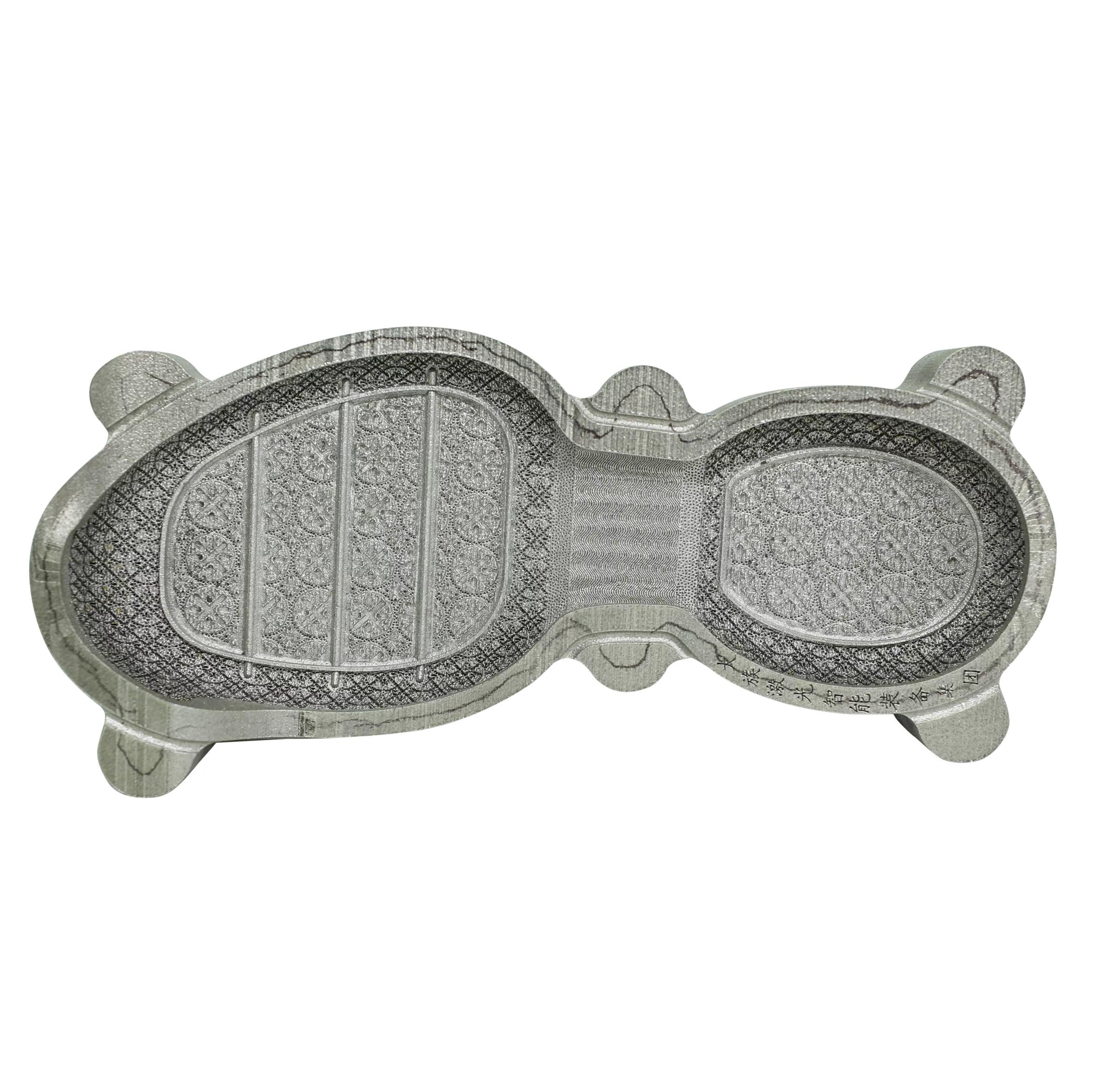
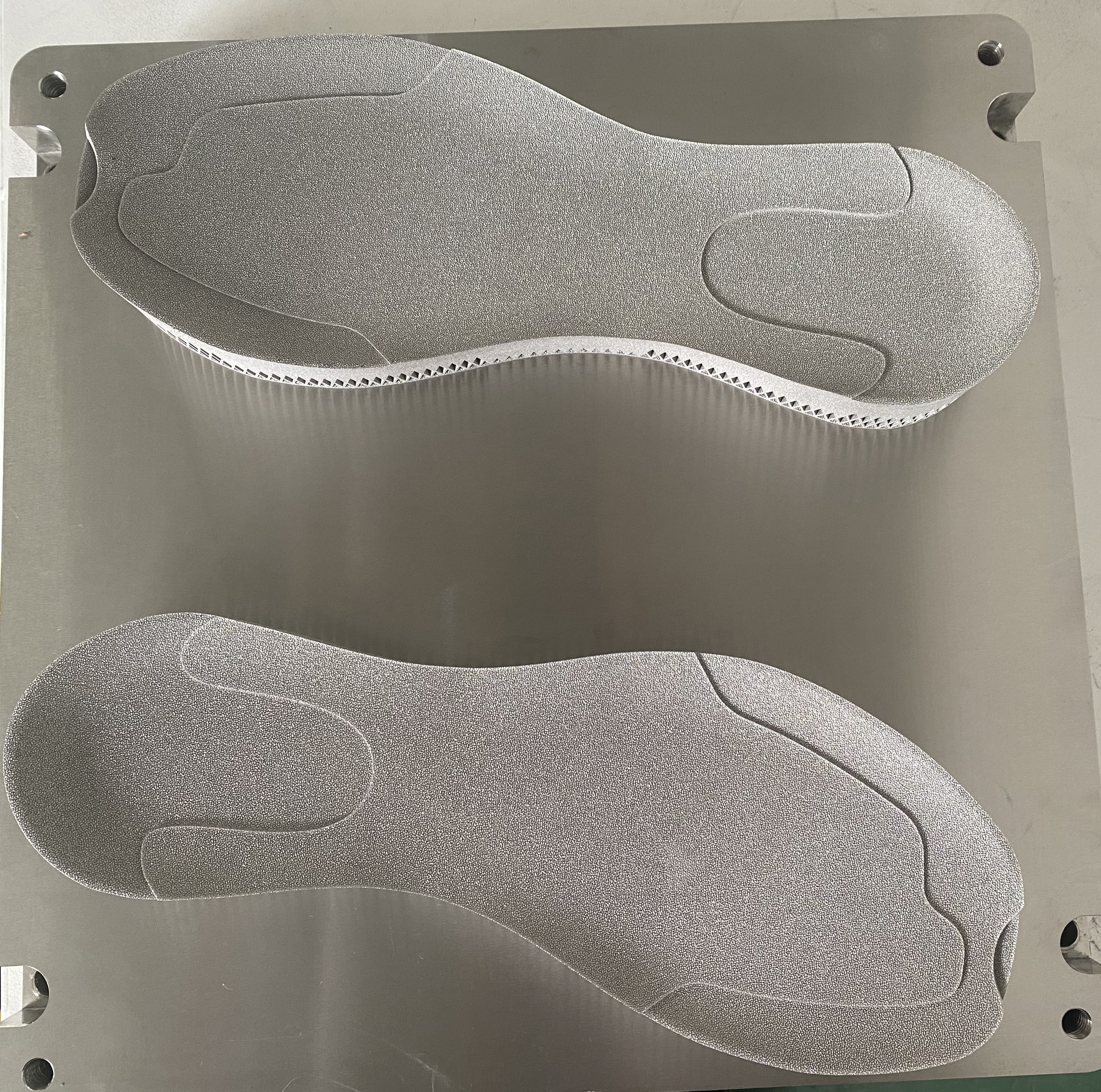
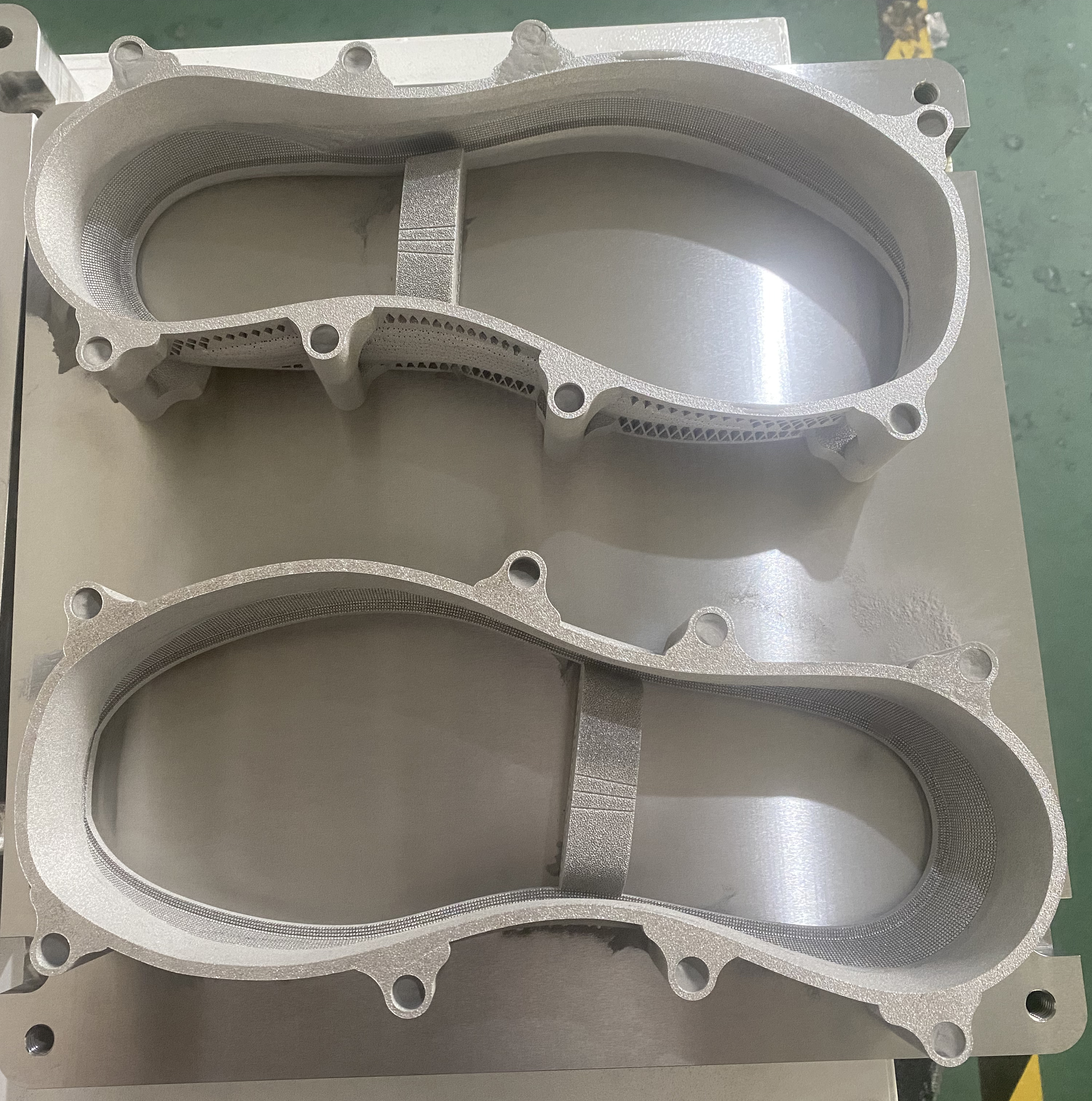
Shoe mold
Industry pain points: Traditional methods are characterized by complex procedures and an extensive array of process steps, creating an urgent need for enhanced efficiency. Advantages of Metal 3D Printing: This technology significantly streamlines complex procedures in conventional shoe mold production, such as wood model fabrication, casting, and texture engraving. The resultant formed components exhibit a refined surface finish with clearly defined texture patterns, while also substantially reducing manufacturing costs. Compared to conventional mold-making processes, the lead time can be shortened by more than half. |  |
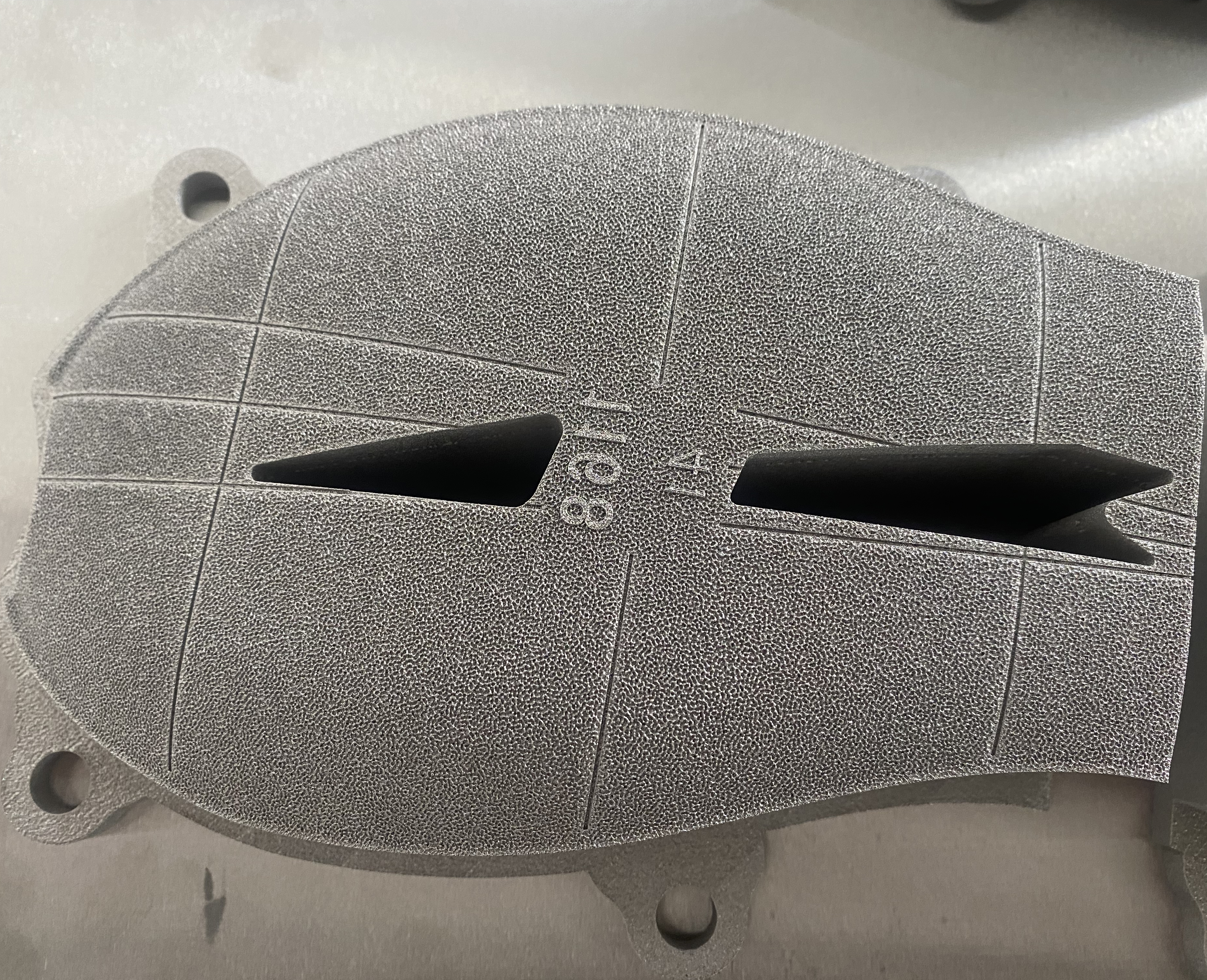
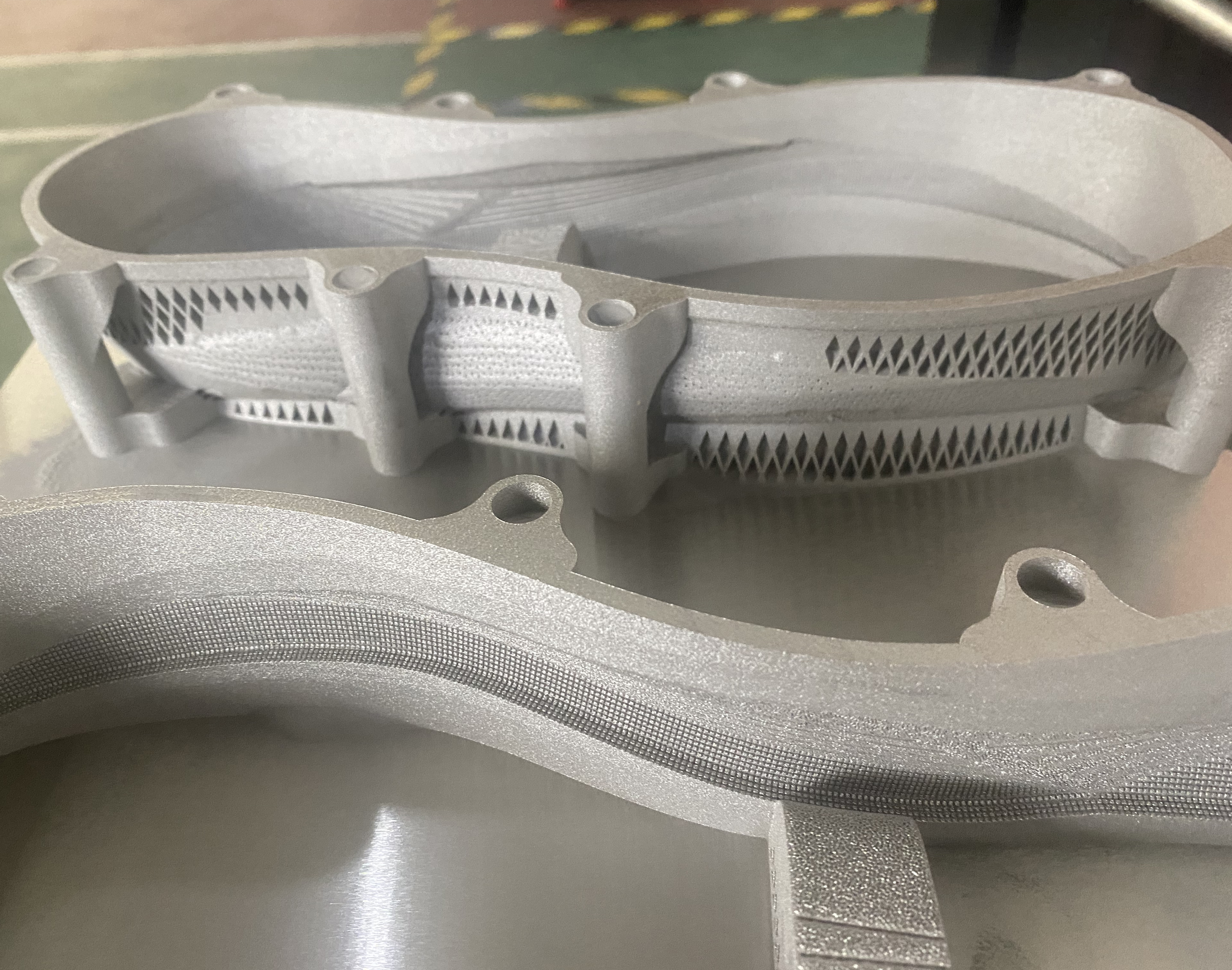
Other molds
Plastics mould
Industry pain points: Conventional machining processes suffer from inconsistent cooling channels, high manufacturing costs for mold components, extended production lead times, prolonged cooling durations, and elevated overall production expenses. Advantages of Metal 3D Printing: This technology enables lightweight mold structures, enhanced material utilization, superior strength, and accelerated processing cycles. Concurrently, uniformly distributed cooling channels in proximity to the formed geometry significantly improve cooling efficiency, reducing blow-molding cycle times by 30%. |  |
Paper-plastic mold
| Industry pain points: During the thermoforming process of paper-plastic molds, moisture evaporation must occur on the molding surface of the die. Currently, the components are manufactured from solid materials, resulting in prolonged moisture evaporation time and inefficient forming performance. Additionally, significant heat loss leads to high production costs. Advantages of Metal 3D Printing: By employing a gas-permeable steel printing process, the finished parts exhibit surface permeability while incorporating embedded heating elements on the rear side. This design enhances thermal utilization, boosts production efficiency, reduces energy consumption, and achieves a 40% increase in production throughput. |  |
Tire mold
Industry pain points: For rubber tire product components with low requirements on mold dimensions yet complex geometries, traditional manufacturing processes involve intricate procedures, extended lead times, and high costs. Advantages of Metal 3D Printing: Employing a subtractive-manufacturing-free process, 3D-printed parts require only surface treatment. After adjustment of assembly positions, they can be mounted on molds for forming and put into use directly. This approach fulfills application requirements without the need for finishing processes, thereby reducing machining costs and enhancing development efficiency. A cost reduction of up to 60% can be achieved. |  |
Rubber mold
Industry pain points: Rubber components, which typically entail moderate dimensional tolerances yet intricate geometries, necessitate conventional machining processes that are often complex, time-intensive, and costly. Advantages of Metal 3D Printing: By adopting 3D printing with a reduction-free process for mold components, the printed parts require only surface finishing. Subsequent to straightforward machining of assembly interfaces, they are readily assembled into functional molds. These molds fulfill operational specifications without necessitating fine machining on the forming surfaces, thereby reducing machining expenditures, enhancing developmental efficiency, and achieving an approximate cost reduction of 40%. |  |
Silicone mold
Industry pain points: For silicone product components requiring less stringent dimensional accuracy but featuring intricate geometries and complex mold parts, conventional machining processes typically entail protracted lead times and elevated costs. Advantages of Metal 3D Printing: By implementing additive manufacturing for mold components without subtractive processing requirements, the printed parts necessitate only surface finishing before direct production use. This approach fulfills operational specifications while reducing manufacturing expenses by 50% and significantly accelerating development efficiency. |  |
The working principle of SLM metal 3D printing
Using metal powder as raw material, the 3D model data is sliced in the Z direction into two-dimensional planar graphics. The two-dimensional planar graphics are sintered and formed on the powder bed by controlling the laser path with a galvanometer, and then the two-dimensional graphics are stacked to form a three-dimensional part.

SLM Metal 3D Printing Materials and Properties(as-heat-treated condition)
| Material type | Material designation | Tensile Strength / MPa | Yield Strength/MPa | Ductility/% | ||
| X-axis and Y-axis direction | Z-axis direction | X-axis and Y-axis direction | Z-axis direction | |||
| aluminium alloy | AlSi10Mg | 456±30 | 440±30 | 311±30 | 270±30 | 8±2 |
| AlSi7Mg | 424±20 | 405±20 | 289±20 | 262±20 | ≥7 | |
| aldural | 541±15 | 515±15 | 520±15 | 475±30 | ≥10 | |
| titanium alloy | TC4 | 1040±90 | 1050±90 | 980±90 | 1000±90 | 14±4 |
| TA15 | 1118±100 | 1142±100 | 1064±100 | 1118±100 | 12±4 | |
| stainless steel | 316L | 678±20 | 650±20 | 427±30 | 418±30 | 51±10 |
| 304L | 600±50 | 597±50 | 353±20 | 352±20 | 55±10 | |
| 4J36 | 550±50 | 530±50 | 492±50 | 472±50 | 34 | |
| 17-4PH | 1110±50 | 1109±50 | 1073±50 | 1046±50 | ≥15 | |
| die steel | MS1(1.2709/18Ni300) | 1833±50 | 1805±50 | 1772±50 | 1739±50 | ≥7 |
| high temperature alloy | GH4169(In718) | 1400±50 | 1250±50 | 1250±50 | 1250±50 | 9~20 |
| GH3625 | 900±50 | 850±50 | 410±50 | 390±50 | ||
| GH5188 | 954±20 | 888±20 | 449±20 | 441±20 | 64±10 | |
| GH3536 | 878±50 | 885±50 | 548±30 | 549±30 | 37±10 | |
| GH4099 | 1215±50 | 1170±50 | 1047±50 | 988±50 | 30±5 | |
Application case
 |  |  |
| Mold Insert | Mold Insert | Die-casting Mold |
 |  |  |
| lampshade | Coffee Cup Lid Mold | Conformal Cooling Insert for Bottle Mold Neck Thread Section |
模具生产效率问
