1.What is mold steel metal 3D printing (SLM) suitable for? What are its core advantages?
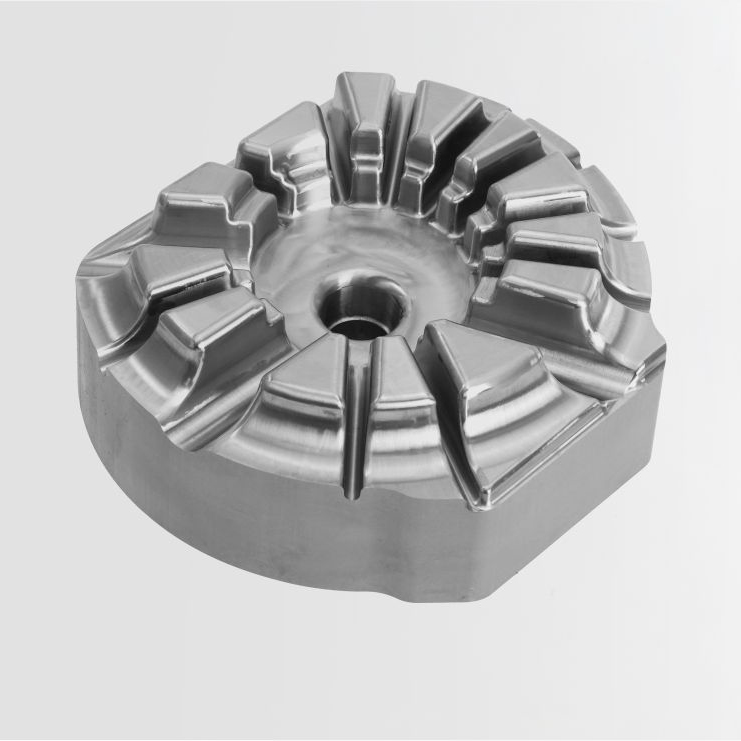
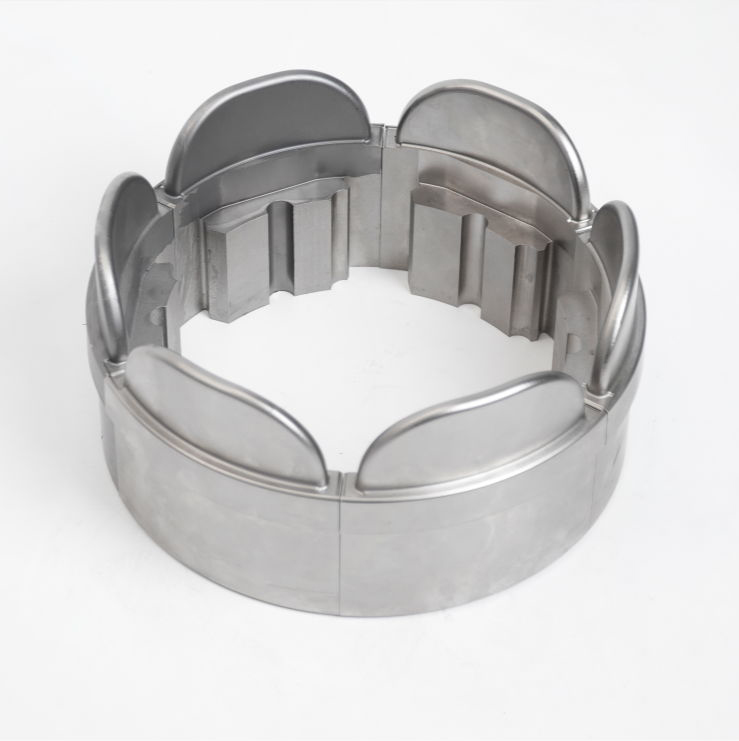
Mold steel (SLM) is mainly used for fixtures, mold inserts and high-strength structural parts. Its advantages are concentrated in the following aspects:
- High-strength route: Suitable for load-bearing and high-demand engineering parts, and compatible with subsequent heat treatment and processing.
- Complex structure one-piece molding: Internal flow channels, conformal cooling, complex cavities, etc. are easier to achieve.
- Subsequent processing space: Can be combined with heat treatment and fine processing to improve hardness and assembly accuracy.
If the structure is simple and cost is a priority, it is usually recommended to evaluate the CNC processing route simultaneously.
2.Is post-printing heat treatment/aging always necessary for mold steel? What are the consequences if omitted?
The necessity of heat treatment depends on your objectives: The higher the requirements for strength, hardness, dimensional stability, and assembly precision, the more advisable it is to incorporate the heat treatment process into the evaluation.
- With heat treatment/aging: More conducive to achieving higher strength/hardness and stability (which also influences subsequent processing strategies).
- Without heat treatment: Suitable for validating structural/assembly relationships or producing prototypes with less stringent performance requirements.
When placing an order, it is recommended to specify the "intended application + whether heat treatment is required / designated material condition" to facilitate customized manufacturing and processing recommendations.
3.What are the achievable accuracy and minimum wall thickness of 3D-printed mold steel? How can the key dimensions be guaranteed?
For reference, the common engineering range on this page is: precision approximately ±0.1mm, and the minimum wall thickness is recommended to be ≥0.5mm. It is more advisable to guarantee the key dimensions through "2D marking + subsequent processing".
- Provide STEP + 2D marking (DWG/DXF/PDF), clearly indicating the reference and tolerance.
- Reserve machining allowance for key holes/fitting surfaces, and lock the assembly precision through subsequent fine processing.
- Mark "key holes/key surfaces/sealing surfaces" in the remarks for convenient placement and optimization of processing strategies.
4.How to place an order for complex cooling channels/internal flow channels more reliably? What should be noted?
For internal flow channel structures, it is recommended to consider "powder removal, inspection, and blocking (if necessary)" during the design stage. Common points to note:
- Minimum channel size: It is recommended to be ≥2.0–3.0 mm, and avoid long distances of complete closure.
- Powder removal path: Reserve powder removal holes for powder removal and discharge to avoid dead corners and sharp turns.
- Blocking/sealing: If the flow channel needs to be blocked or sealed, it is recommended to specify the interface standard and key surface requirements.
You only need to write in the remarks "flow channel purpose/medium/whether a sealing surface is needed", and we will provide manufacturability suggestions during the evaluation stage.
5.What mainly determines the quotation? Why do prices vary greatly for the same volume?
The quotation for SLM metal printing is not only determined by volume but also affected by the following factors:
- Structural complexity: More overhangs, thin walls, and internal channels will increase risks and working hours.
- Support and placement: The amount of support, the position of key surfaces, and the difficulty of removing support will affect the cost and appearance.
- Post-processing and machining: Sandblasting, tapping, and whether additional precision processing is required will significantly affect the unit price.
- Quantity and delivery time: Small batches can spread out the preparation cost; urgent orders will affect production scheduling and available options.
To get an accurate quotation faster, it is recommended to note: purpose, quantity, delivery time, key dimensions/tolerances, whether there are internal channels, whether tapping is required, and key surface requirements.
6.What post-processing techniques are supported for 3D-printed mold steel, and what surface finish quality can be achieved?
The post-treatment for this material is based on sandblasting and tapping.
- Sandblasting: Enhances surface uniformity and appearance, suitable for engineering appearance and uniform texture requirements.
- Tapping: Used for threaded assembly and positioning connections (thread specifications and quantities need to be clearly defined).
If you have requirements for mirror finish, ultra-low roughness or critical surface fit, additional precision processing strategies are usually needed; it is recommended to specify the target appearance and critical surface definition in the remarks in advance.
7.How can threaded holes be made more reliable? Can we directly print the threads?
For the reliability and consistency of assembly, tapping is more recommended:
- Please specify the thread specification (M2/M3/M4/M6...), hole depth and quantity.
- For critical connection positions, it is suggested to provide 2D annotations and references to facilitate ensuring coaxiality/positioning.
- If the hole position is close to thin walls or stressed areas, it is recommended to increase the margin or thicken/reinforce.
"Directly printing threads" is not stable enough for small threads and high-assembly requirement scenarios, and is usually not recommended as the first choice.
8.What are the common risks of deformation, cracking, and stress concentration? How can they be mitigated through design?
In metal Selective Laser Melting (SLM), common risk factors typically arise from "thin walls, large planar surfaces, abrupt thickness variations, and long cantilever structures." The following design recommendations are proposed to mitigate these risks:
- Uniform wall thickness: Avoid sudden thickening or thinning; incorporate transitional fillets where necessary.
- Rib reinforcement and cross-section optimization: Large planar areas should be reinforced with ribs or designed as separate assemblies.
- Definition of critical surfaces: Design critical mating surfaces as post-machining features with adequate machining allowances.
If you provide 2D drawings with annotations and usage specifications, we can offer more targeted Design for Manufacturability (DFM) recommendations during the evaluation phase.
9.What documents are required to be provided? Which 3D/2D file formats are supported?
We support mainstream 3D/2D engineering file formats as follows:
- 3D Formats: STEP/STP, STL.
- 2D Formats: DWG, DXF, PDF (It is recommended to include fully dimensioned drawings with reference datums.)
The combination that facilitates a faster and more accurate quotation is: STEP files accompanied by 2D dimensioned drawings, especially for projects involving tolerances and assembly reference requirements.
10.How to Obtain Accurate Quotations Efficiently? What Information Should Be Included in the Order Remarks for Optimal Effectiveness?
To facilitate expedited and precise quotations, it is recommended that you provide the following details when uploading your files:
- Intended Application: Specify whether the component is for a fixture, mold insert, or structural part. Indicate whether internal. runner/cooling channels are required.
- Quantity and Delivery Schedule: Specify if the order is urgent, and whether batch delivery is acceptable.
Critical Dimensions and Tolerances: Provide details on mating surfaces, locating holes, sealing surfaces,and associated tolerances (preferably with 2D drawings featuring dimension callouts). - Post-Processing and Machining Requirements: Indicate if sandblasting or tapping is needed. For tapping, specify thread specifications, quantity, and locations.
- Surface Finishing Standards: Clarify which surfaces must remain intact, which surfaces may be sandblasted, and whether critical surfaces require masking.
Simply follow these three steps: Upload your drawings → Review the engineering evaluation and quotation → Confirm and proceed with production and delivery.