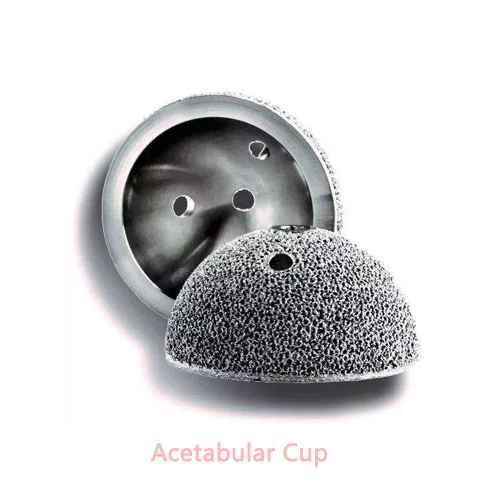
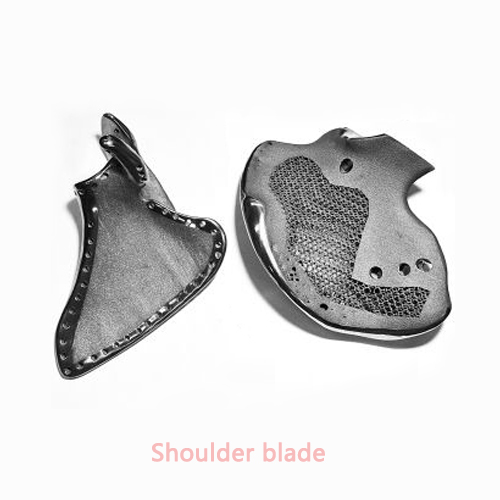
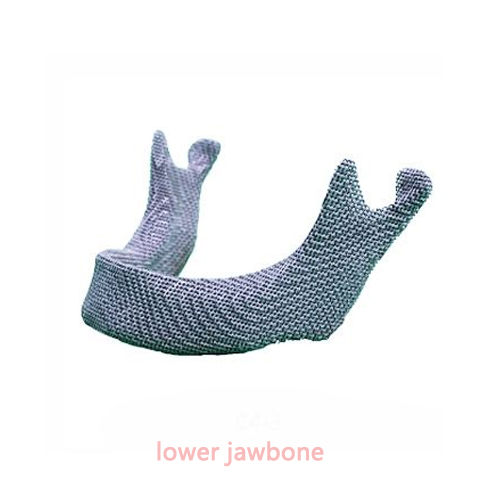

Product Introduction
Sector demand
1.New material
Developing novel materials with enhanced implantable value requires meticulous consideration of key properties, including biocompatibility, biodegradability, and shape-memory effects.
2.personalized customization
The fabrication of implants with a high degree of congruence to both the individual characteristics of the patient and the specific pathological site represents a significant clinical challenge. Conventional subtractive manufacturing techniques, such as milling-based approaches, struggle to achieve such precise and customized alignment.
3.bionic structure
The implant material must exhibit weight and elastic modulus properties comparable to human bone. Specific regions of the implant should possess a trabecular bone-like microstructure to facilitate osteogenic induction and promote bone cell proliferation.
4.volume production
Implants must be amenable to stable mass production, with productivity meeting the requirements for market release. The mechanical properties of the materials used in mass production must demonstrate high levels of stability and consistency.
Our solution
1.Titanium Alloy Processing Methodology
We have validated the established process methodology for titanium alloy materials.
Consistency of Mechanical Properties
|  |
| Titanium alloy | ||||
| Sampling orientation | UTS/MPa | YS/MPa | El/% | |
| Titanium Alloy for Orthopedic Applications | horizontal direction | 1039 | 970 | 15 |
| vertical direction | 1045 | 986 | 15 | |
| ASME SB348 | / | 895 | 828 | 10 |
|  |
| direction | project | Rm (MPa) | Rp0.2 (MPa) | E(%) | A(%) | E (GPa) |
| horizontal directon | average value | 1005.556 | 939.1111 | 21.51852 | 56.18519 | 123.5852 |
| standard deviation | 2.819347 | 3.00427 | 0.562985 | 1.301982 | 2.495951 | |
| variable coefficient | 0.28% | 0.32% | 2.62% | 2.32% | 2.02% | |
| vertical direction | average value | 990.8 | 908.1 | 21.325 | 54.6 | 118.71 |
| standard deviation | 3.994733 | 3.905462 | 0.466651 | 1.046297 | 3.608747 | |
| variable coefficient | 0.40% | 0.43% | 2.19% | 1.92% | 3.04% |
 | |
| |
2.New material
The industry has developed specialized forming processes for novel materials such as tantalum and magnesium alloys, as well as nickel‑titanium alloys, which possess significant application value in the medical field.
| New material | Material Functionality |
| Tantalum | Tantalum exhibits superior biocompatibility compared to titanium alloys and demonstrates enhanced osseointegration capability with human bone tissue in clinical applications. |
| Magnesium alloy | Magnesium alloys, characterized by their lightweight properties and biodegradability in physiological environments, serve as an ideal filling material for implants, eliminating the need for secondary surgical removal. |
| Nitinol | Ni-Ti alloys exhibit shape memory properties and hold significant application value in medical devices such as cardiovascular stents. |
| Material: Pure Tantalum Formation Equipment: M160,M260(SLM) Tantalum exhibits excellent biocompatibility, making it suitable for orthopedic implants by enhancing osseointegration capabilities and promoting the adhesion and proliferation of osteoblasts. Moreover, tantalum possesses higher surface energy and wettability compared to titanium alloys, which improves the interaction between bone tissue and the implant. With its high density and superior ductility, tantalum is well-suited for manufacturing porous structures in implants, demonstrating significant potential for applications in 3D-printed medical devices. |  |
| Tensile strength: 489.1 MPa. Yield strength: 441.4 MPa. Elongation after fracture: 32.55%. Reduction of area: 83.43%. | |
| Material: Magnesium Alloy Forming Equipment: M160, M260 (SLM) Magnesium alloys exhibit excellent biocompatibility and biodegradability. They are suitable for medical implant applications requiring controlled degradation, such as maxillofacial repair and bone filler blocks. |  |
3.personalized customization

- Leveraging patient-specific medical imaging data, a customized three-dimensional implant model is generated through CAD-based parametric modeling and structural optimization design.
- The physical prosthesis is subsequently fabricated via additive manufacturing, where the dimensional accuracy of 3D printing ensures full geometric fidelity to the digital model, thereby satisfying the requirements for personalized medical device customization.

- Based on the patient's medical imaging data, a three-dimensional implant model customized to individual anatomical characteristics is generated through computer-aided design (CAD) modeling and structural optimization.
- The utilization of 3D printing technology enables the fabrication of physical objects, wherein the dimensional accuracy of the printed constructs allows for a full-scale reproduction of the three-dimensional implant model, thereby meeting the requirements for personalized customization.
4.Biomimetic Structures (Porous Architectures)
- Minimum rod diameter: 0.1 mm, aperture diameter: 200–400 µm.
- The geometric configuration and porosity of the porous structure can be custom-designed to achieve high congruity with the trabecular bone architecture.
- Mechanical Compatibility: In contrast to dense metallic materials, porous structures exhibit a significantly reduced elastic modulus, which aligns more closely with that of human bone. This characteristic effectively mitigates stress shielding effects, prevents bone resorption following implantation, and enhances the mechanical compatibility between the implant and the host bone.
- Tissue Compatibility: The porous structure, which more closely resembles the trabecular bone architecture, promotes the growth of human bone cells, thereby enhancing the tissue compatibility between the implant and the host bone.
5.volume production
- Customized process parameters tailored to the characteristics and application requirements of medical products yield superior product quality, improved surface roughness, and enhanced forming efficiency.
- High uniformity and consistency: Demonstrated conformity through isotropic analysis, cross-regional assessments of the same format, and multi-batch validations, meeting the requirements for mass production.
Our M260 metal 3D printer is equipped with a dual-laser system, which enhances production efficiency by 60% to 70% compared to single-laser forming equipment.
Application case
Interbody fusion cage Material: Titanium Alloy Machining Time: 42 hours Equipment: M260 Weight: 0.7 kg (full build plate) All these types of interbody fusion devices are standardized, implantable products. A lattice structure design is incorporated to hollow out the parts, thereby reducing the overall elastic modulus of the devices. Utilizing the dual-laser M260 system, a total of 432 parts are produced per full build plate in a remarkable print time of only 42 hours. |  |
Total Knee Condyle Material: Cobalt-Chromium-Molybdenum Alloy Machine Time: 4 hours Equipment: M260 Weight: 0.26 kg Knee joint components such as femoral condyles and tibial trays are subject to stringent standards for surface finish and wear resistance after prosthetic polishing, imposing exceptionally high requirements on the manufacturing process. Through targeted development of this material, we have achieved a density comparable to that of forged components, with no discernible surface defects on the polished articular surfaces. |  |
Full Knee Brace Support Material: Cobalt-chromium-molybdenum alloy Dimensions (W × D × H): Φ72 mm × 46 mm × 52 mm Processing Time: 2 hours Equipment: M160 Weight: 0.21 kg Laser additive manufacturing enables the mass production of cobalt-chromium alloy knee joint implants. The resulting products exhibit high dimensional accuracy and excellent density, with joint surfaces free from defects such as pores or cracks after polishing. |  |
Tantalum Mortar Material: Tantalum Dimensions (W × D × H): Φ50 mm × 50 mm Machine Time: 12 h (for 2 pieces) Equipment: M160 Weight: 0.5 kg The product is a porous acetabular floor augmentation wedge, fabricated using our proprietary pure tantalum processing technology. Tantalum exhibits outstanding biocompatibility and osteoinductive properties. Its fully interconnected trabecular structure, combined with optimized porosity relative to other implant materials, facilitates extensive tissue ingrowth and robust osseointegration. |  |
Magnesium Alloy Tibia/Femur Material: Magnesium Alloy (WE43) Dimensions (W × D × H): 60 mm × 25 mm Build Time: 60 h Equipment: M260 Weight: 200g Magnesium is well-tolerated by the human body, exhibiting excellent absorbability and biocompatibility. Medical-grade magnesium alloys demonstrate density and elastic modulus closely resembling those of bone, along with controllable corrosion rates. Currently, we have successfully established the forming parameters for magnesium alloy materials. |  |
Nickel-Titanium Alloy Cardiovascular Stent Material: Nickel-Titanium Alloy Dimensions (W×D×H): Φ8mm×100mm (per unit) Machine Time: 10h Equipment: M160 Weight: 1g Leveraging the application-specific requirements of vascular stents, our company has developed a specialized shape memory alloy processing technology capable of fabricating intricate structures within the 0.1–0.2mm range. The material exhibits superelasticity and, following deformation training, demonstrates an excellent shape memory effect. |  |