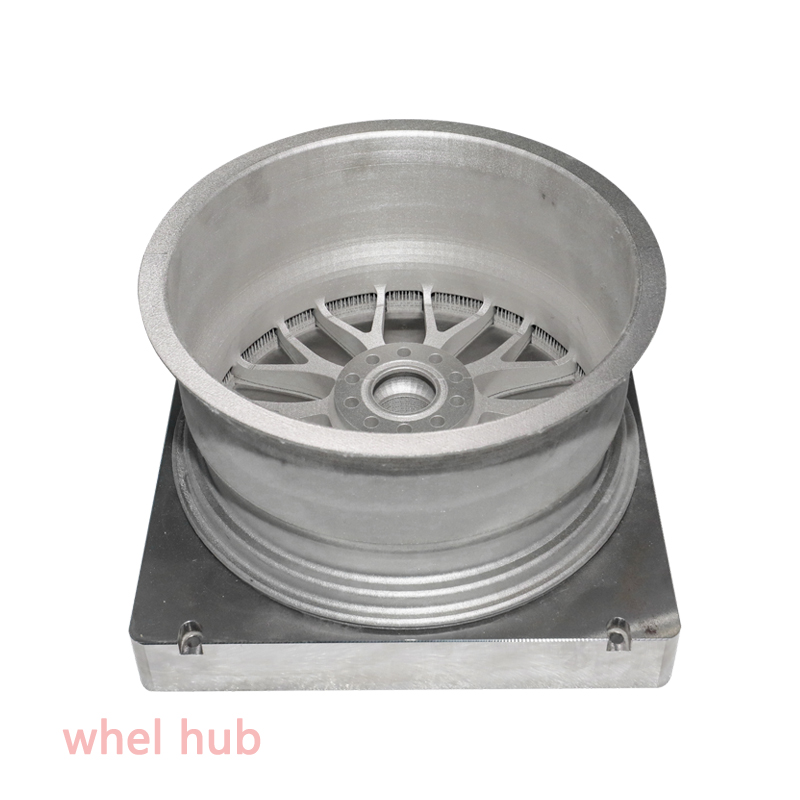
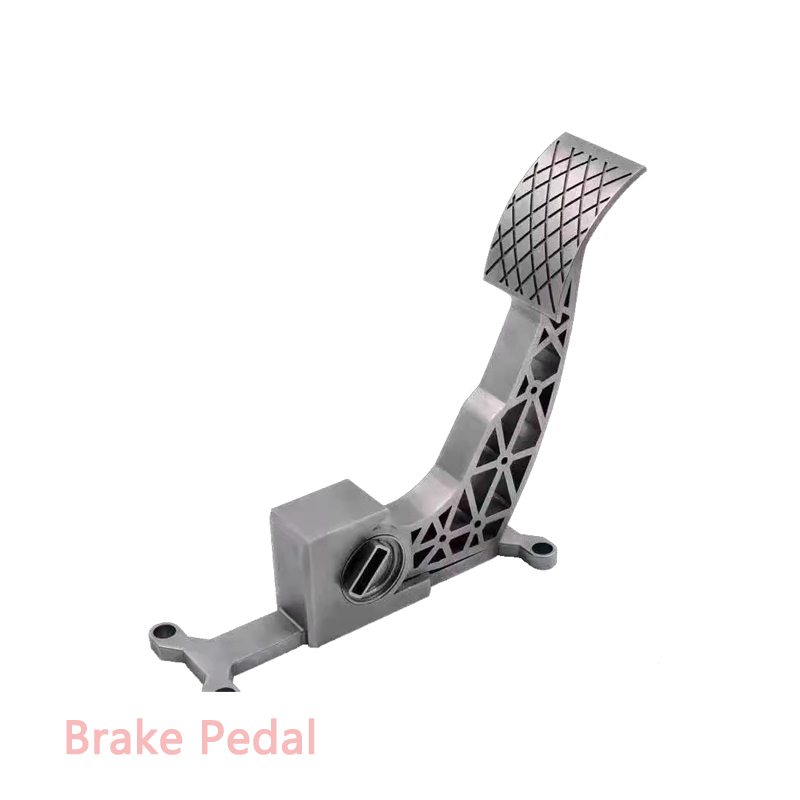
1.What is aluminum alloy AlSi10Mg (SLM) best suited for? What are its core advantages?
AlSi10Mg is suitable for projects that require "lightweight + heat dissipation/conduction + complex structure in one piece", such as heat sinks, lightweight brackets, and complex flow channel components.
- Lightweight structure: Reducing weight while meeting strength requirements.
- Complex structure in one piece: Reducing assembly and welding, suitable for parts with more complex internal structures.
- Functional parts/terminal parts: It can be used in scenarios for verifying and delivering metal strength requirements.
2.What are the suitable applications of 316L stainless steel (SLM)? What are its core advantages?
316L stainless steel (fabricated via Selective Laser Melting, a metal 3D printing technology) is commonly employed for complex structural functional components and end-use parts. Its key advantages include:
- Superior Corrosion Resistance: Enhanced reliability in humid, saline, or chemically aggressive environments.
- High Structural Integrity: Suitable for load-bearing structures and functional parts.
- Integrated Fabrication of Complex Geometries: Offers distinct benefits for internal flow channels, reduced assembly requirements, and customized topological configurations.
3.How to choose between metal 3D printing and CNC machining?
Simple judgment:
Complex structure / internal flow channels / integrated design: Metal 3D printing is preferred.
Simple structure, extremely high precision / surface finish requirements and cost-sensitive: CNC is preferred.
Combination of the two: Printing and forming complex shapes + precision machining of key holes / sealing surfaces / mating surfaces, often offers better cost performance.
4.What are the key parameters (dimensional tolerance/wall thickness/tensile strength/heat resistance/density) of AlSi10Mg?
- Dimensional Tolerance: ±0.1mm.
- Minimum Wall Thickness: 0.5mm.
- Tensile Strength: 320–460MPa.
- Heat Resistance: 200 °C.
- Density: 2.65g/cm³.
5.What are the key parameters (precision/wall thickness/strength/temperature resistance) of 316L approximately?
For reference, the common range is as follows (subject to engineering review and drawing requirements):
- Precision: ±0.1
- Minimum wall thickness: 0.5mm
- Tensile strength: 480–650MPa
- Temperature resistance: 400℃
- Density: 7.9 g/cm³
If there are critical mating dimensions or sealing requirements, it is recommended to provide 2D annotations and plan for secondary processing.
6.What documentation is required for quotation submission? Which 3D/2D drawing formats are supported?
We accept mainstream 3D/2D engineering file formats:
- 3D: STEP/STP, STL.
- 2D: DWG, DXF, PDF (key dimensions, tolerances, datums, and surface requirements should be clearly annotated).
For metal 3D printing, it is advisable to provide STEP files accompanied by 2D drawings with annotations to facilitate prompt validation of assembly and precision requirements.
7.What are the primary factors determining the cost of metal 3D printing?
Support Structures and Part Orientation: Excessive overhangs and support structures increase both processing time and associated risks.
Structural Complexity: Thin walls, long cantilevers, and intricate internal channels or flow paths elevate manufacturing difficulty.
Post-Processing Requirements: Necessity for shot blasting and tapping (number and specifications of threads).
Production Volume and Delivery Timeline: Batch production can amortize setup and post-processing time; expedited orders require assessment of production scheduling feasibility.
8.What post-processing operations are applicable to this material? What surface effects can be achieved?
Post-processing options: Sandblasting and tapping.
- Sandblasting: Enhances surface uniformity and tactile quality.
- Tapping: Ensures improved stability in threaded assembly performance.
9.Can internal flow channels or cavity structures be printed? What considerations are required?
Yes, provided that they satisfy the criteria of "powder removability and cleanability." The following recommendations are proposed:
- Reserve powder discharge holes and cleaning passages to avoid fully enclosed cavities.
- Conduct a Design for Manufacturability (DFM) review for complex flow paths to confirm support strategies and post-processing procedures.
- For cavities requiring strict sealing or cleanliness standards, clearly specify residual powder and cleaning requirements in the remarks section.
10.What's the best way to handle threaded holes? Can we print the threads directly?
For the sake of assembly consistency and strength stability, it is usually recommended to tap after drilling the reserved hole (which is more reliable).
- Please note the thread specification (M value), quantity and position.
- For critical assembly holes, it is recommended to provide 2D tolerance and datum annotations.
11.What are the common risks of deformation and cracking? How can they be reduced in design?
- Thin-walled large planes, long cantilevers, and sudden changes in thickness are more prone to deformation.
- It is recommended to maintain a smooth transition of the wall thickness, add stiffeners and increase the radius of the fillets.
- Try to avoid large areas of overhang on the key surfaces to facilitate support and subsequent processing.
12.How to Obtain Accurate Metal 3D Printing Quotations Efficiently? What Information Should Be Included in Remarks for Maximum Effectiveness?
When uploading files, please clearly indicate the following:
- Materials: Specify the metal material to be used. It is preferable to indicate it on the drawing. Currently, the mature materials available for metal 3D printing include stainless steel, aluminum alloy, titanium alloy, high-temperature alloy, and pure copper.
- Purpose: Lightweight structure / Heat dissipation and conduction / Complex structure integration / Terminal parts.
- Key dimensions: Fit holes, reference surfaces, tolerances (2D preferred).
- Internal cavity / Flow channel description: Powder discharge holes, cleaning channels and sealing requirements.
- Post-processing: Whether sandblasting and tapping are required (thread specifications / quantity / location).
- Quantity and delivery date: Standard or expedited, delivery location.
You only need to follow three steps: Upload drawings → Confirm engineering assessment and quotation → Confirm and proceed with production and delivery.